Aluminium chloride in antiperspirant: how it works and is it safe?
Aluminium salts are the basis of most antiperspirants, and there are many worrying rumours about them. Here is how aluminium chloride works and what is actually known about its safety.
Short answer
Aluminium chloride temporarily reduces the amount of sweat reaching the skin’s surface in the area where it is applied. The American Cancer Society and the US National Cancer Institute have found no evidence linking antiperspirants to breast cancer, and a link between aluminium and Alzheimer’s disease has not been confirmed. The most common unwanted reaction is skin irritation.
How aluminium chloride works
Aluminium salts dissolve in the moisture on the skin and form superficial plugs in the upper part of the sweat gland ducts. While the plugs remain, less sweat reaches the skin’s surface in that area.
The effect is temporary: the plugs gradually wash away over time and sweating returns. The product acts locally and does not “switch off” sweating throughout the body.
Why dry skin and the evening matter
Aluminium chloride is considered one of the most effective ingredients in over-the-counter antiperspirants. Hyperhidrosis specialists advise applying such products in the evening before bed and only to completely dry skin.
Sweating is usually lower at night, which makes it easier for the formula to work. On damp skin the risk of stinging and irritation increases.
What is known about breast cancer and Alzheimer’s disease
The American Cancer Society and the US National Cancer Institute report that there is no scientific evidence linking antiperspirant use to the development of breast cancer. Research shows that only a tiny fraction of aluminium is absorbed through the skin — far less than the body takes in from food.
The idea of a link between aluminium and Alzheimer’s disease arose after studies in the 1960s, but their results could never be replicated. According to a statement by the Alzheimer’s Association, the research community is generally convinced that aluminium is not a key risk factor for the disease.
When to take extra care
The most common reaction to aluminium salts is stinging, mild itching, or skin irritation. Mild sensations usually pass on their own, but if there is marked burning, wash the product off and take a break.
- Do not apply the product to damaged or irritated skin.
- Wait up to 48 hours after hair removal.
- If you have kidney disease, discuss the use of aluminium-based products with your doctor.
- If a reaction persists or gets worse, see a specialist.
How this works in OKEY
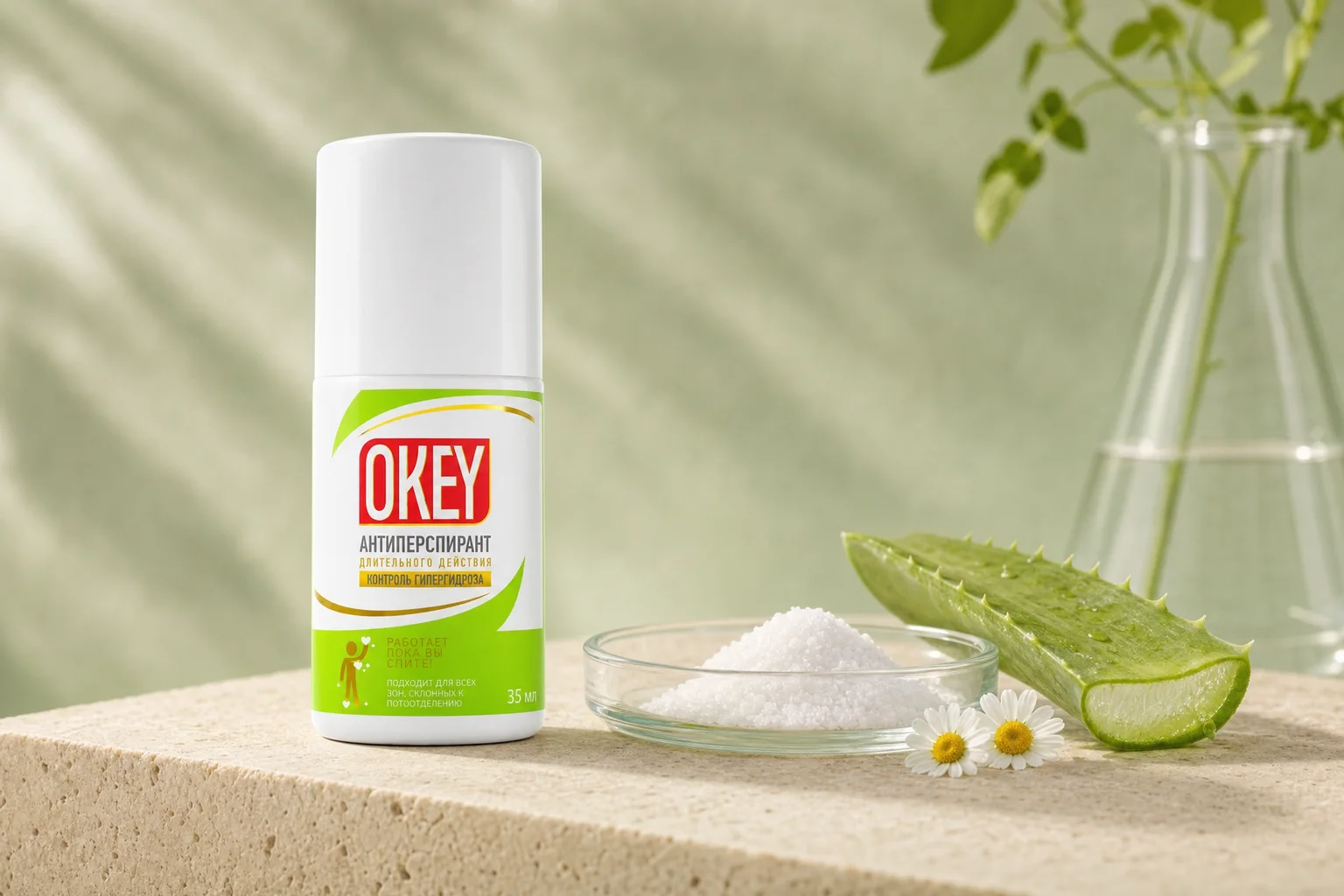
OKEY contains a carefully measured amount of aluminium chloride, designed for high effectiveness with minimal risk of irritation. The Total Care Defense complex with aloe, panthenol, hyaluronic acid, chamomile extract, allantoin, and glycerin helps keep the skin comfortable.
The formula contains no alcohol and no fragrance. Apply OKEY in a thin layer in the evening to clean, completely dry skin, and wash off the residue in the morning with water and mild soap.
Sources and documents
- International Hyperhidrosis Society: antiperspirant basics
- American Cancer Society: antiperspirants, aluminium, and breast cancer risk
- US National Cancer Institute: antiperspirants/deodorants and breast cancer
- International Hyperhidrosis Society: is there a connection to Alzheimer’s?
- OKEY for professionals: the formula