Antiperspirant and deodorant: what is the difference?
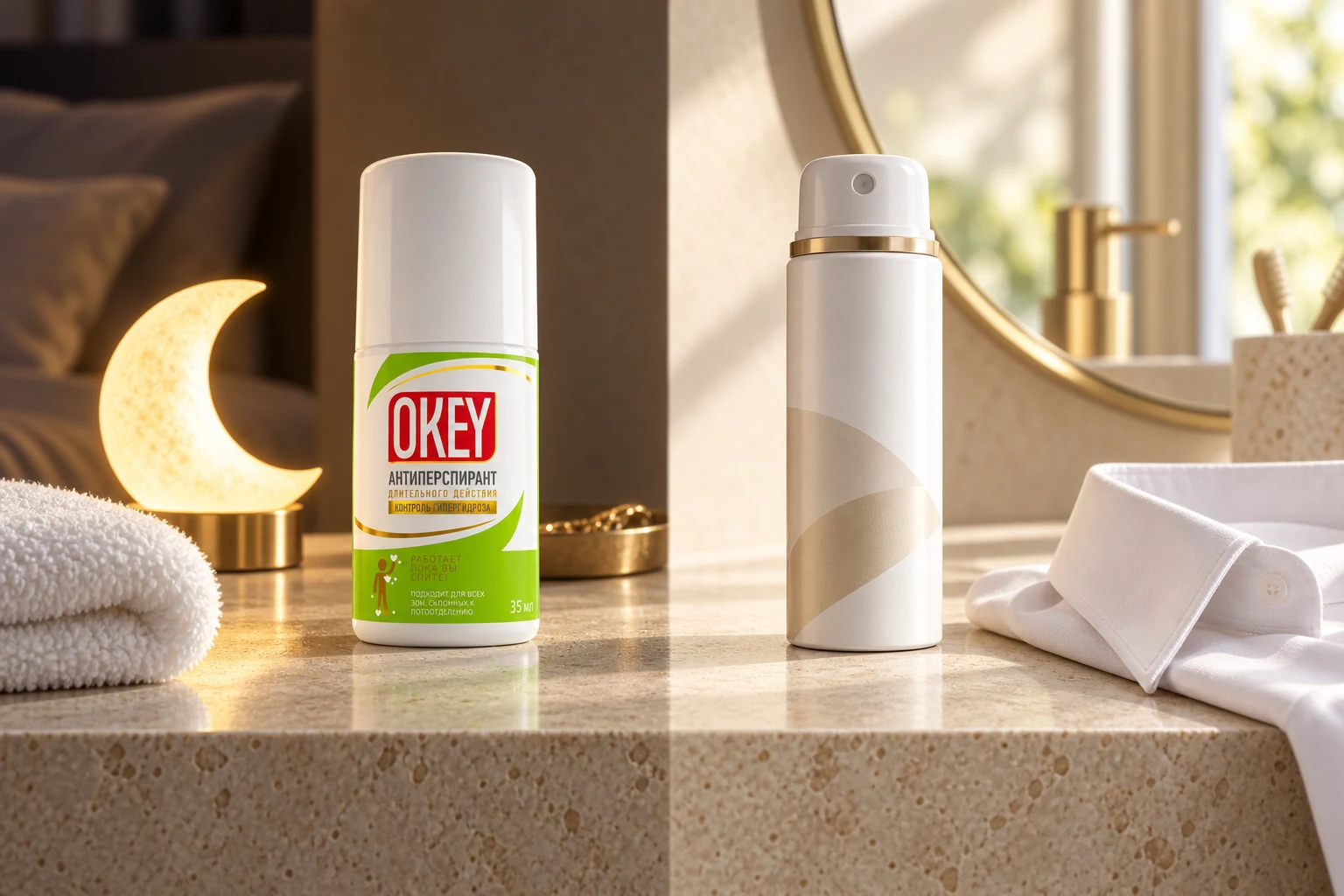
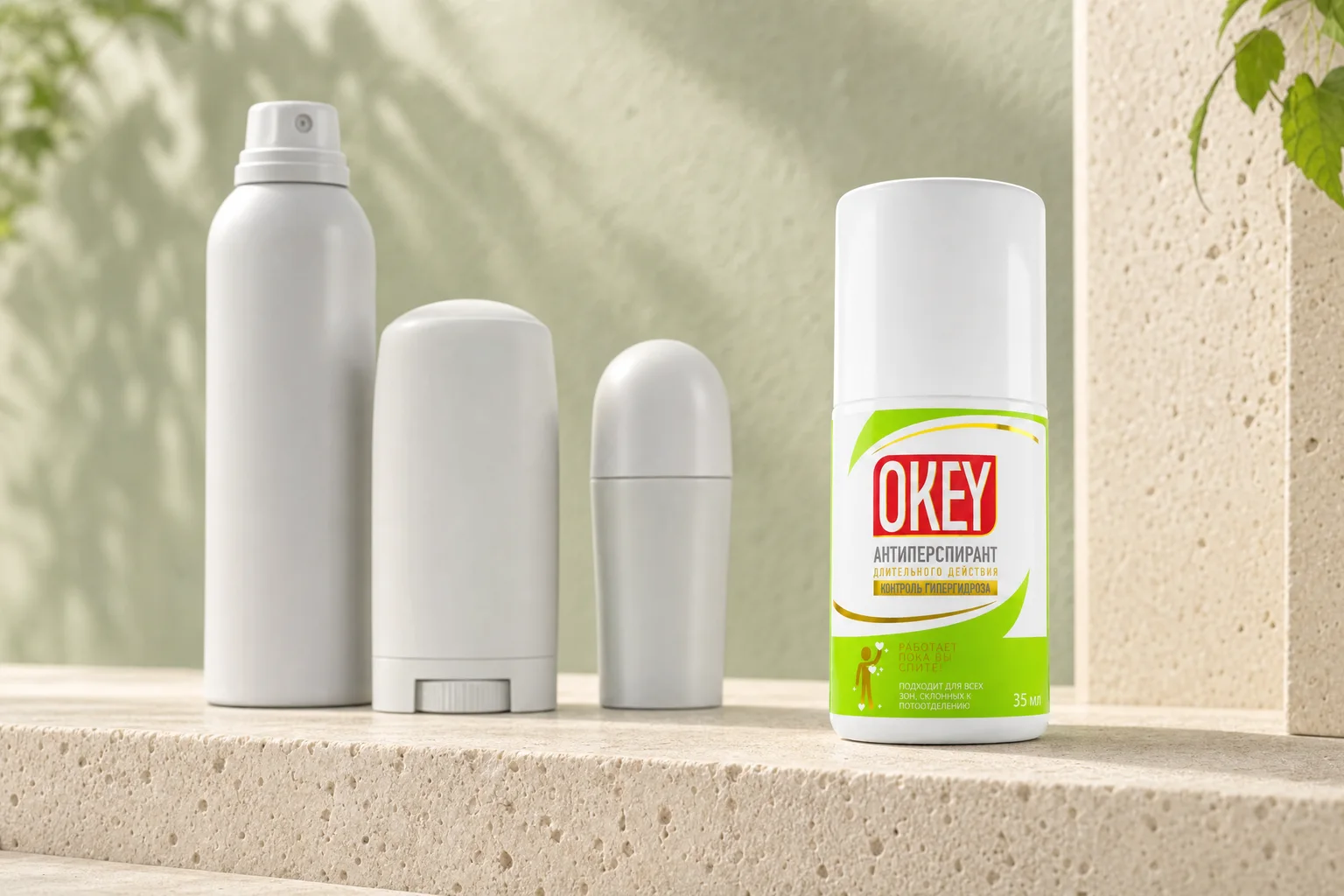
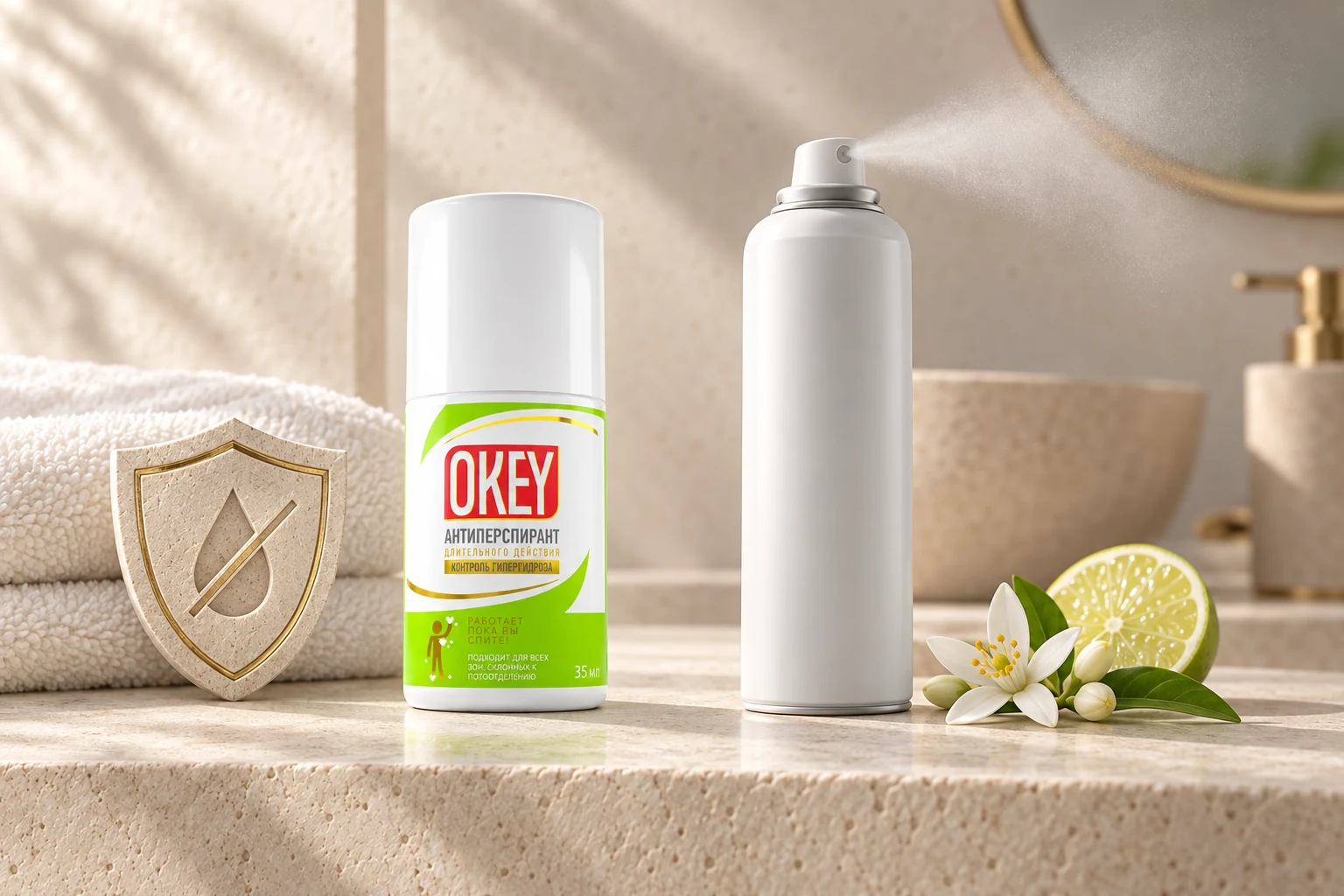
One product helps reduce the amount of sweat reaching the skin’s surface; the other primarily addresses odour. Understanding the difference makes it easier to choose the right care routine.

Practical answers about perspiration, skin, and correct application.
Featured articleWhy antiperspirant is applied at nightEvening application is not a formality. It helps the product work in the most suitable conditions and lowers the likelihood of irritation.Read article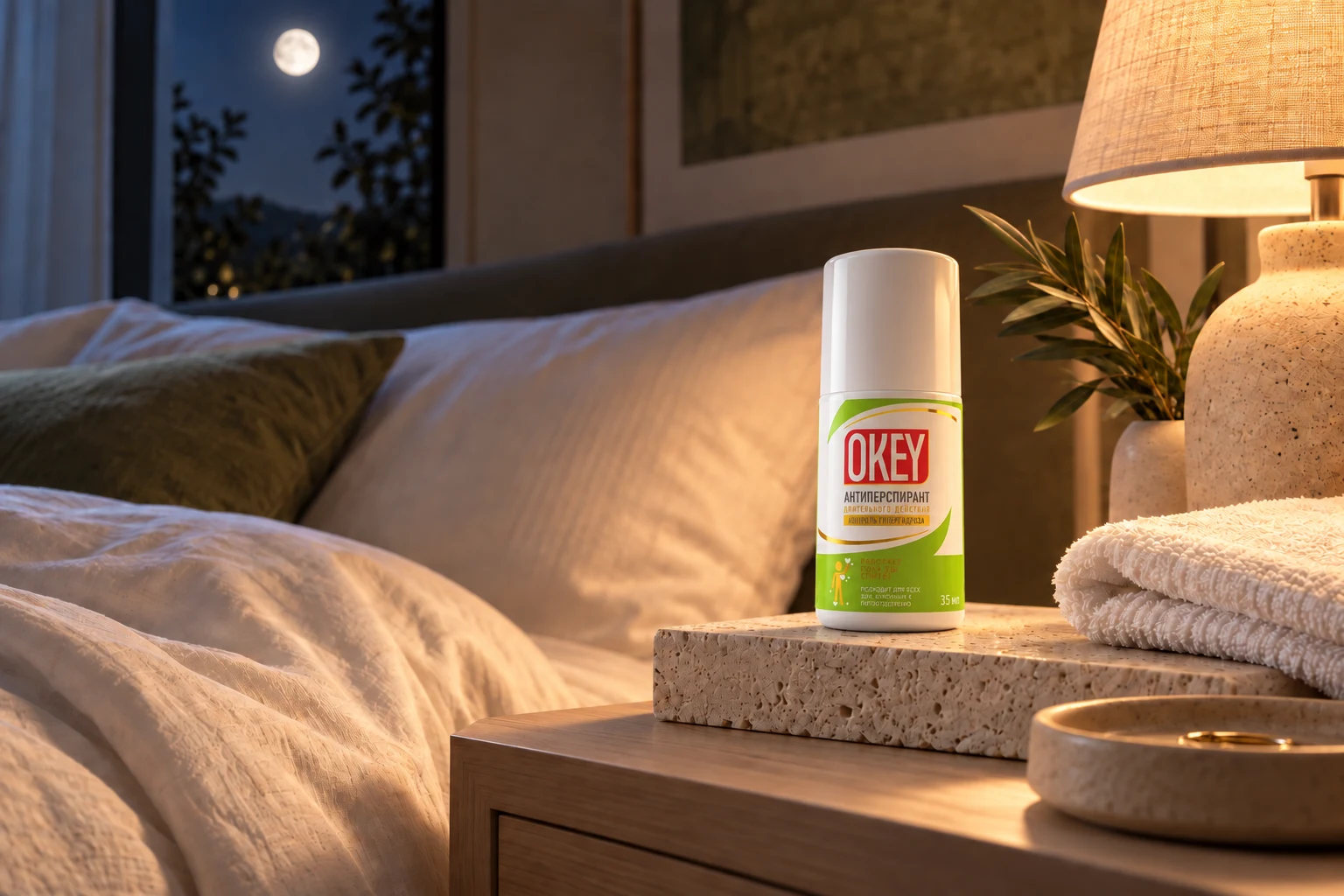 03 / 22
Four articles build a clear sequence: understand the principle, learn the technique, prepare your skin, and assess the result.
22 in-depth answers — focused, useful, and free from filler.
One product helps reduce the amount of sweat reaching the skin’s surface; the other primarily addresses odour. Understanding the difference makes it easier to choose the right care routine.
The result of a long-lasting antiperspirant depends not on the amount of product, but on proper skin preparation and evening application.
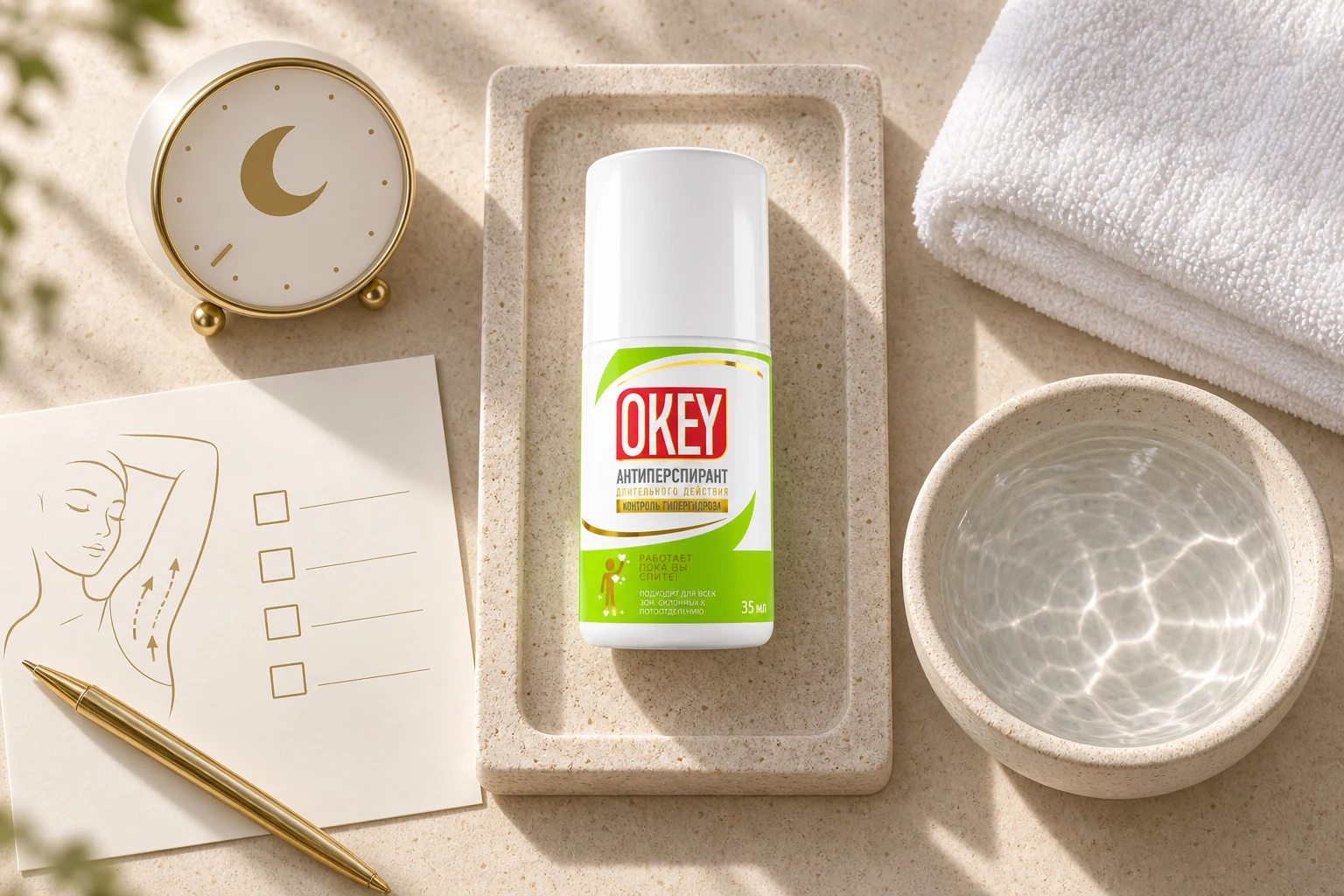
Evening application is not a formality. It helps the product work in the most suitable conditions and lowers the likelihood of irritation.
Completely dry skin is one of the key conditions for comfortable and effective use of a long-lasting antiperspirant.
After hair removal, the skin barrier may be temporarily compromised even when there are no visible cuts. Waiting helps reduce the risk of burning and irritation.
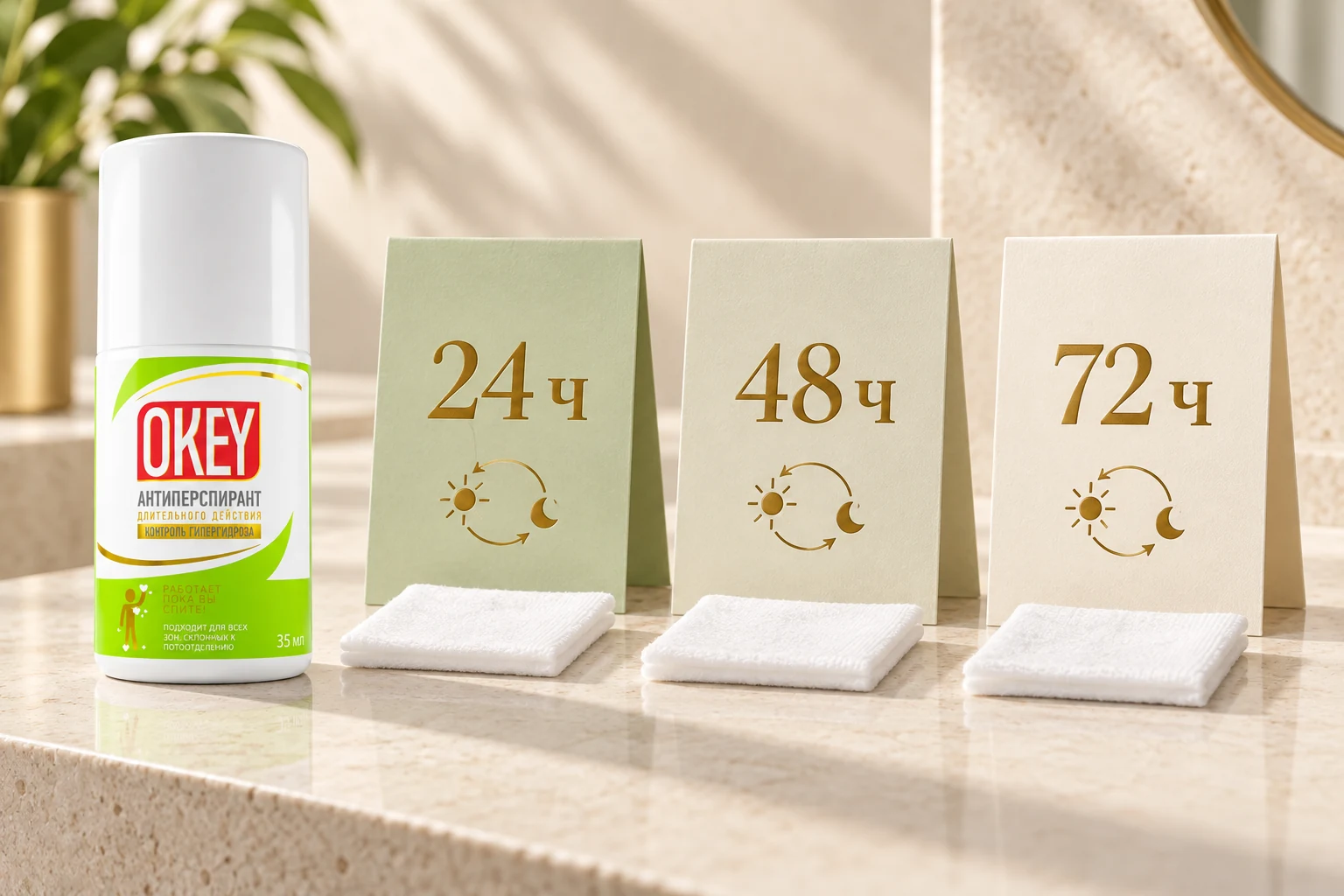
The phrase “up to 72 hours” describes the maximum stated duration with correct use, but it does not promise the same result for every person.
A weak first result is most often related not to the amount of product, but to skin moisture, application timing, or washing it off too soon.
OKEY and deodorant address different tasks, so when needed they can be separated by time: antiperspirant in the evening, deodorant in the morning.
Sweating is necessary for temperature regulation. Hyperhidrosis is considered when the body produces more sweat than it needs and this noticeably interferes with everyday life.
No fragrance has been added to OKEY. The product is focused on sweat control and should not compete with the scent you normally wear.
35 ml may look compact, but OKEY is not intended for heavy daily application. A thin layer and an infrequent routine tailored to you make the product economical.
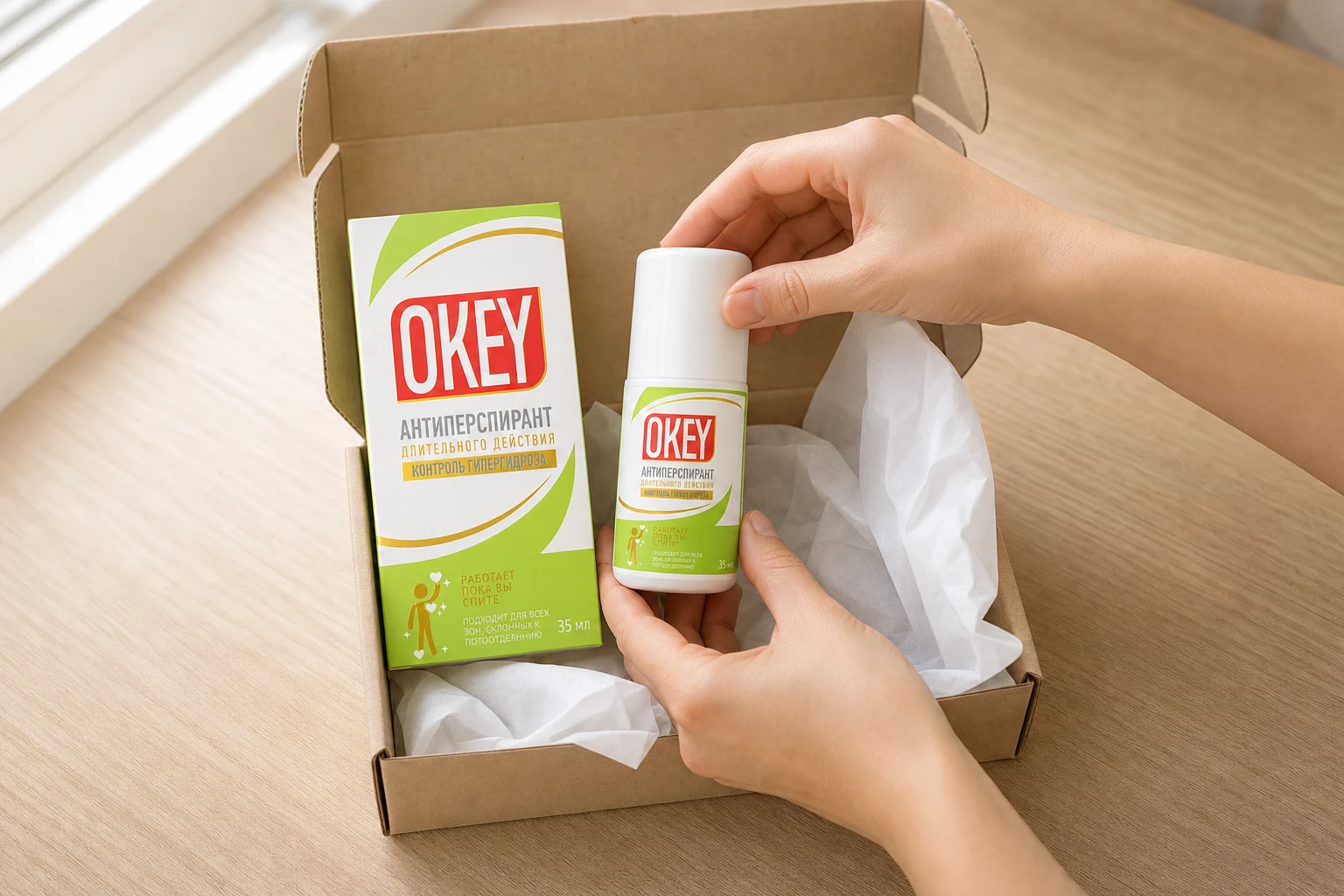
You can try OKEY without worry: if it does not suit you for any reason, return the bottle within 14 days and we will refund your money. There are no separate testers or wipes in the set.
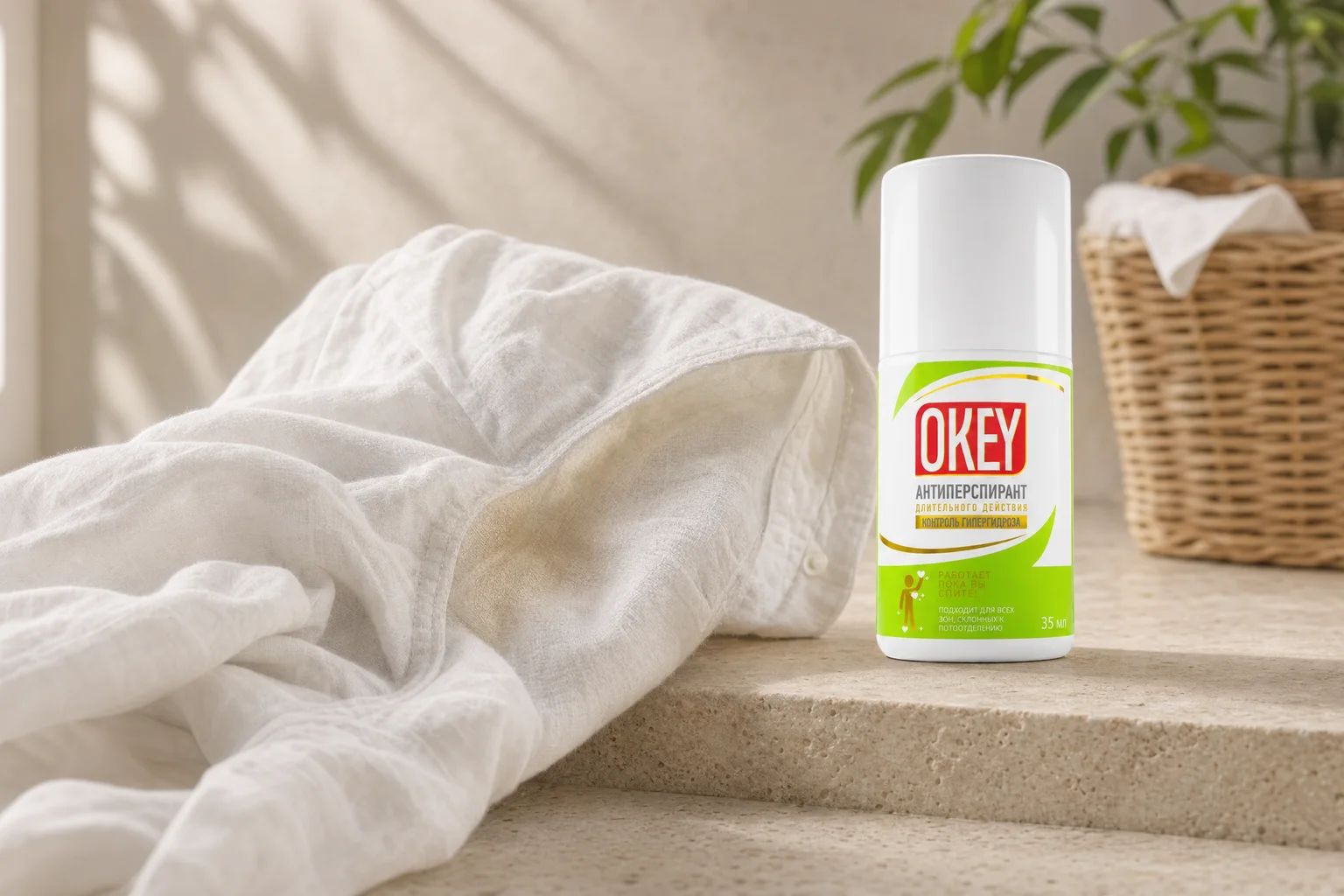
Underarm marks are a common reason to give up favourite shirts and T-shirts. They are usually left not by sweat alone, but by a combination of sweat, the product on the skin, and the way the fabric is cared for.
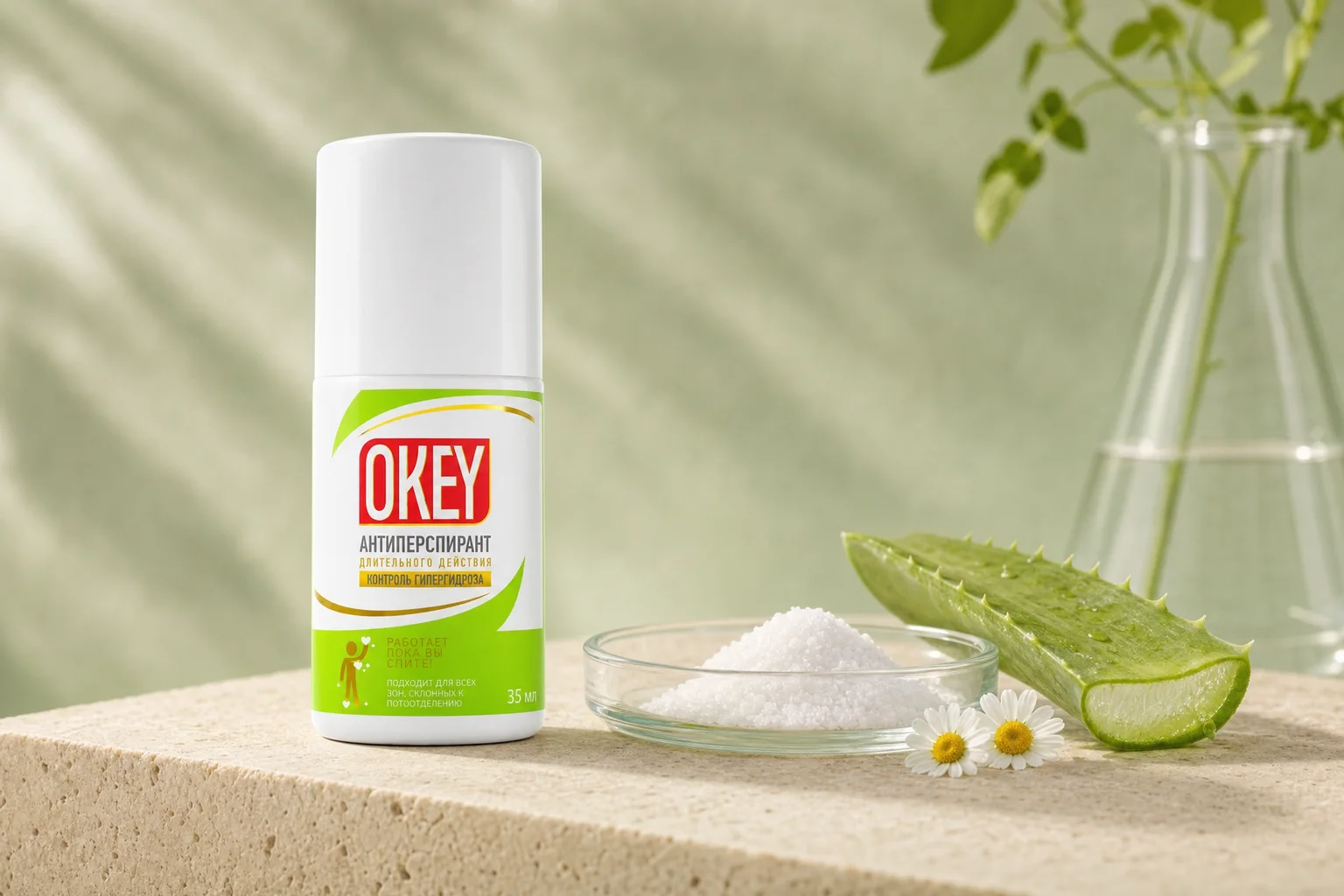
Aluminium salts are the basis of most antiperspirants, and there are many worrying rumours about them. Here is how aluminium chloride works and what is actually known about its safety.
Fresh sweat has almost no smell. Odour appears later, when bacteria on the skin break down substances released by the sweat glands.
Before an interview, a presentation, or an important meeting, your palms and underarms may get wet even in a cool room. This is a normal reaction of the nervous system to tension.
With heavy sweating, what matters is not the scent or the packaging but which ingredient controls sweat, how the product is applied, and whether it suits your skin.
Hyperhidrosis is not a life sentence and nothing to be ashamed of. There are several levels of help, and treatment is usually chosen step by step: from the simplest and gentlest methods to more complex ones.
Waking up slightly damp on a hot night under a warm duvet is a normal body response. It is a different matter if you regularly wake up in wet clothes and bedding even though the bedroom is not hot.
Antiperspirants are surrounded by scary stories: that they stop the body from cooling, trap toxins, and cause serious diseases. Let’s look at what medical organisations say.
Stinging or itching after an antiperspirant is most often linked not to using it as such, but to the conditions: damp skin, recent shaving or too thick a layer.
Sweat glands in men and women work on the same principle. The difference between "men’s" and "women’s" antiperspirants usually lies in fragrance, packaging and marketing.
There are no articles in this topic yet.
See the exact OKEY application sequence and all precautions.