
Coffee, spicy food and alcohol: what really makes you sweat more
Beads on your forehead after a peppery noodle dish, a damp back after the second cup of coffee, a rush of heat after a glass of wine: many people notice that sweating is linked to what they eat and drink. It is not your imagination. Some foods and drinks really do trigger sweating, but everyone's triggers are different, and there is no need to give up everything at once.
Short answer
Spicy food, hot drinks, caffeine and alcohol make many people sweat more: some trigger the body's cooling response, others stimulate the nervous system or widen the blood vessels in the skin. To find out what affects you, keep a sweat diary for two or three weeks. Facial sweating during meals is usually harmless, but sweating on only one cheek, sudden sweating without a cause, or night sweats with weight loss and fever are reasons to see a doctor.
Why food and drink affect sweating
Sweating is controlled by the nervous system, and its response changes with more than just the weather. Hot soup or tea raises your body temperature from the inside, and the body starts cooling itself with sweat.
Spicy food works differently. Capsaicin, the substance that makes chilli hot, stimulates the same nerve endings that respond to heat. The brain reads this as overheating and switches on cooling: sweat appears on the forehead, above the lip, on the temples and scalp. This is called gustatory sweating, and for most people it is normal.
Coffee, tea and other sources of caffeine
The American Academy of Dermatology lists caffeine among common sweat triggers. Caffeine stimulates the nervous system, and if the drink is hot, heat is added on top. The same organisation's list includes coffee, caffeinated tea, cola, chocolate and cocoa.
That does not mean you have to give up coffee. Try a few simple steps first and see what changes.
- Drink your coffee warm or iced rather than scalding hot.
- Make the cup smaller, or swap the second cup for water.
- Skip coffee right before an important meeting or presentation, when nerves may already make you sweat more.
- Remember the hidden caffeine in energy drinks, cola and strong tea.
Alcohol: heat, flushing and night sweats
Alcohol widens the blood vessels in the skin: you feel warm, your face flushes, and the body starts releasing heat, including through sweat. That is why many people sweat in the evening and at night after a celebration. The NHS directly advises people with excessive sweating to avoid alcohol and spicy food.
If you notice that you wake up in damp sheets after drinking, track the link in your diary. Night sweats that have nothing to do with alcohol, food or a hot room are covered in “Night sweats: when they are normal and when to see a doctor”.
How to find your triggers: a sweat diary
Triggers differ from person to person: chilli makes one person sweat, hot tea affects another, and a third is bothered by neither. The American Academy of Dermatology recommends keeping a sweat diary to find your own causes. Besides spicy food and caffeine, the academy mentions fatty, sugary, salty and protein-rich foods.
For two or three weeks, write down briefly, without counting calories:
- what you ate and drank, and whether the dish was hot or spicy;
- when the sweating started, where, and how strong it was;
- what else was going on: heat, rushing, nerves, exercise;
- whether you drank alcohol the evening before and how you slept.
When sweating while eating means seeing a doctor
See a doctor if only one side of your face sweats while you eat, such as the cheek, temple or the area in front of the ear, especially after surgery or an injury in that area. This may be Frey syndrome, and it can be treated.
Also see a doctor if sweating after meals comes with palpitations, headache, hot flushes or weakness, or if sweating starts suddenly, gets worse at night, covers your whole body, or comes with unexplained weight loss and fever.
If someone who drinks heavily develops shaking, heavy sweating, anxiety or confusion when trying to stop, they need urgent medical help: call 103 or 112.
The bottom line: what you can do today
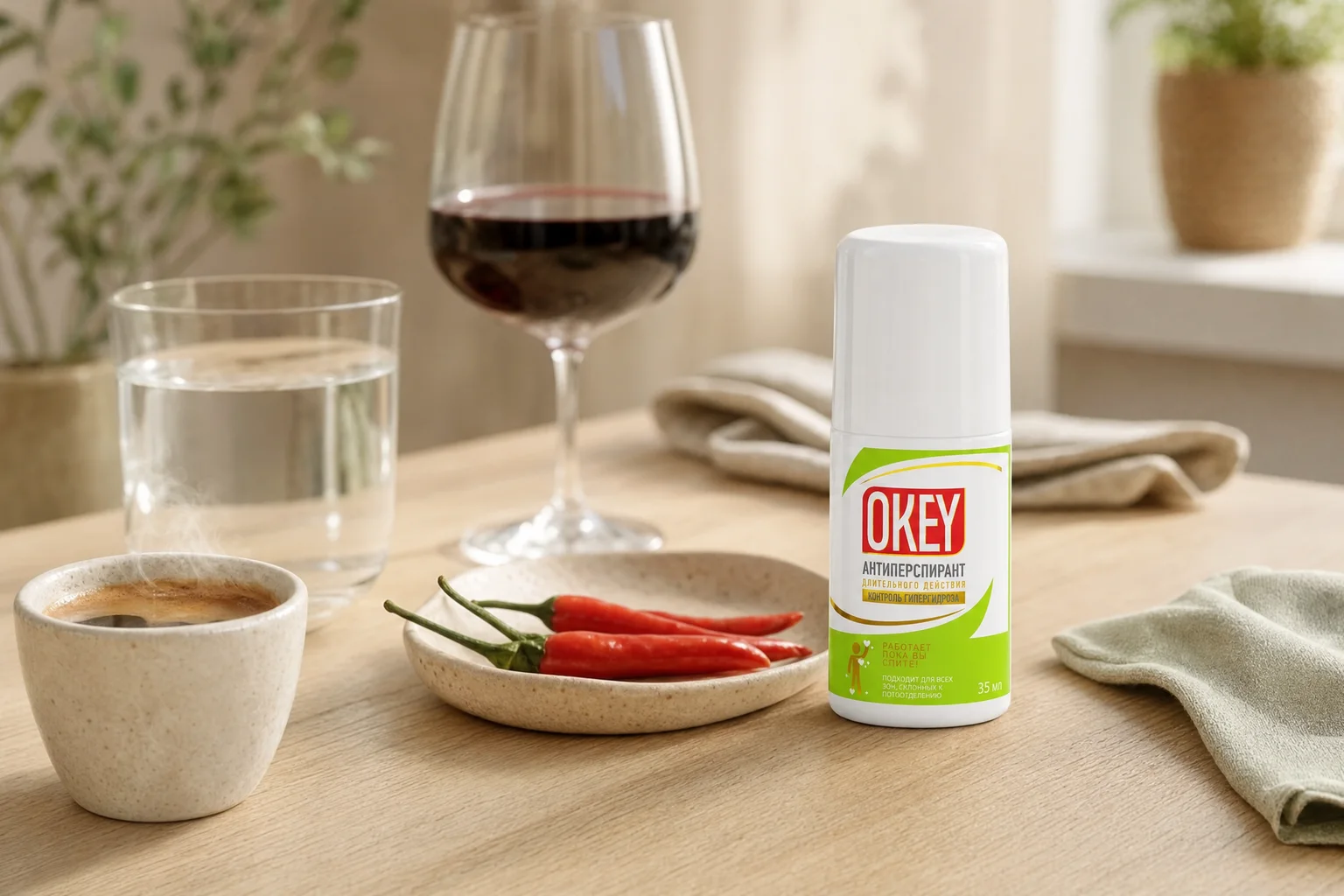
Food and drink most often explain sweating on the face and head. If what bothers you is damp underarms and marks on your clothes all day, add a long-lasting antiperspirant to cutting back on your triggers.
OKEY is a fragrance-free underarm antiperspirant for women and men in a 35 ml roll-on bottle. You apply a thin layer in the evening before bed to completely dry skin and wash off the residue in the morning, as the instructions say. It costs 7990 ₸ and is available on Kaspi via the button below. If it does not suit you, the bottle can be returned within 14 days.