Sweating during menopause: what is happening and what helps
A sudden wave of heat in a meeting, a damp pillow in the middle of the night, a cardigan you keep taking off and putting back on: this is how many women describe hot flushes. They are among the most common symptoms of menopause. They are not dangerous in themselves, but they can seriously disrupt sleep and work, and you do not have to simply put up with them.
Short answer
During menopause, oestrogen levels fall and temperature control becomes more sensitive, which causes hot flushes and night sweats. A cool bedroom, light layered clothing, a fan, cool showers and fewer triggers (spicy food, caffeine, hot drinks, alcohol and smoking) all help. The most effective treatment is chosen by a doctor: it may be hormone replacement therapy or non-hormonal options. An antiperspirant will not stop a hot flush, but it will reduce damp underarm marks. If symptoms are affecting your life, see a gynaecologist.
What is happening in the body
In perimenopause and menopause, the ovaries produce less oestrogen. This affects the temperature-control centre in the brain: it starts reacting to small changes in temperature as if the body urgently needs to cool down.
That is how a hot flush happens: the face, neck and chest suddenly feel hot, sweat breaks out, and you may get palpitations, anxiety or dizziness. At night the same thing shows up as night sweats. According to the NHS, menopause symptoms usually last 7 to 9 years, sometimes longer, and they can change over time.
What makes hot flushes worse
The NHS advises avoiding or cutting down on things that can trigger hot flushes. Every woman's set of triggers is different, so it helps to note for a few weeks what makes things worse. We explain how to keep such a diary in “Coffee, spicy food and alcohol: what really makes you sweat more”.
- spicy food;
- caffeine and hot drinks;
- alcohol;
- smoking;
- stress and rushing.
How to make days and nights easier
Simple measures do not stop hot flushes, but they make them easier to live with. The NHS recommends light clothing, a cool bedroom, a cool shower, a fan and a cold drink during a flush, as well as regular exercise.
- Dress in layers so you can take off the top one when a flush starts. Read which fabrics work best in “Which fabrics to choose if you sweat a lot: cotton, linen, wool and synthetics”.
- Keep the bedroom cool: air it before bed, and use a fan and light cotton or linen bedding.
- Keep water by the bed and a spare nightshirt within reach, so you do not have to get up for long.
- Look for ways to reduce stress: the NHS notes that cognitive behavioural therapy can also help with hot flushes.
- If your night sweats do not feel like hot flushes, read “Night sweats: when they are normal and when to see a doctor”.
Which treatments to discuss with a doctor
The main way to reduce hot flushes and night sweats is hormone replacement therapy: oestrogen as tablets, patches, a spray or a gel. It is prescribed by a doctor after weighing the risks, and you should not start it on your own.
If hormones are not right for you, there are non-hormonal options: cognitive behavioural therapy and certain medicines chosen by a doctor. There is no need to endure it for years just because “everyone goes through it”: severe symptoms can be treated.
When to see a doctor
Book an appointment with a gynaecologist if hot flushes and night sweats disrupt your sleep, work or social life, if menopause symptoms started before the age of 45, or if you are bothered by palpitations.
See a doctor without delay if you have any vaginal bleeding after 12 months without a period, or if night sweats come with fever, unexplained weight loss, a cough or swollen lymph nodes: in these cases the cause may not be menopause.
The bottom line: where an antiperspirant helps
A hot flush is a whole-body reaction, and no antiperspirant can stop it. But damp underarms and marks on your blouse are the part you can reduce right now, while you and your doctor choose a treatment.
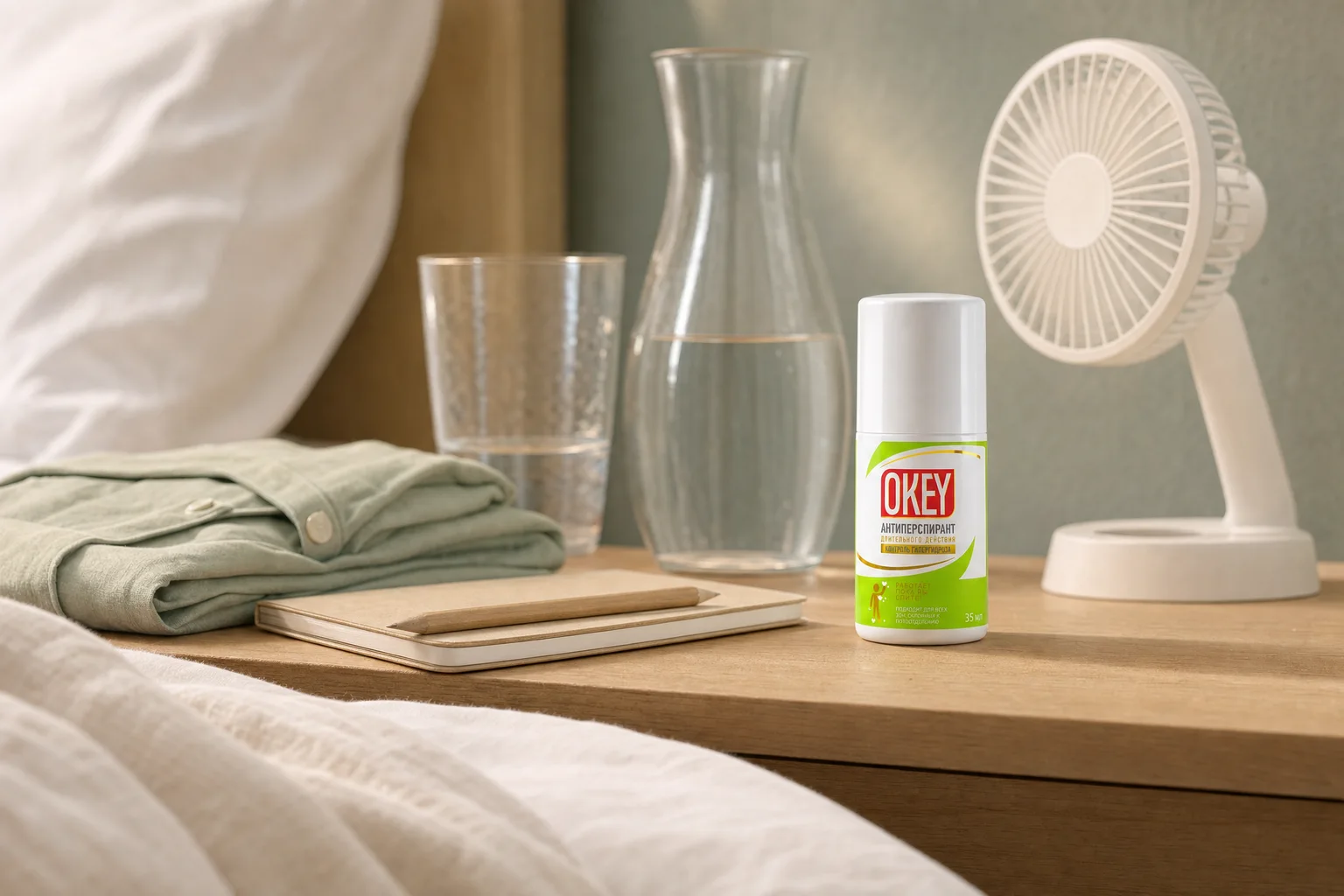
OKEY is a fragrance-free underarm antiperspirant for women and men, so it does not mix with your perfume. It comes in a 35 ml roll-on bottle. Apply a thin layer in the evening before bed to completely dry skin, as the instructions say; if a hot flush starts just before bed, wait until it passes and your skin is dry. Wash off the residue in the morning. It costs 7990 ₸ and is available on Kaspi via the button below, and if it does not suit you, the bottle can be returned within 14 days. If hot flushes are affecting your life, do not put off seeing a doctor.