Which fabrics to choose if you sweat a lot: cotton, linen, wool and synthetics
The same shirt can look fresh until evening on one person and show dark circles within an hour on another. Often it is not only about how much you sweat but about the fabric: it decides where the moisture goes, how quickly it dries and how visible the mark will be.
Short answer
Fabric does not reduce how much you sweat, but it changes how sweat feels and looks. For everyday life, loose cotton and linen clothing is the most comfortable. For workouts, technical sportswear that wicks moisture away quickly works well, but it needs to be washed more often and more thoroughly. Avoid dense ordinary synthetics and tight cuts. An antiperspirant reduces the sweat itself in the underarms, and clothing helps keep what is left out of sight.
What fabric can and cannot do
How much you sweat depends on your body, the temperature, activity and stress, not on your T-shirt. But fabric controls much of what you notice: whether your skin can breathe, whether moisture is absorbed or stays on the skin, how fast the garment dries, how visible marks are and how strongly clothes hold on to odour.
So clothing is the second line of defence. The first is reducing sweat where it bothers you most, such as the underarms.
Cotton and linen: the everyday choice
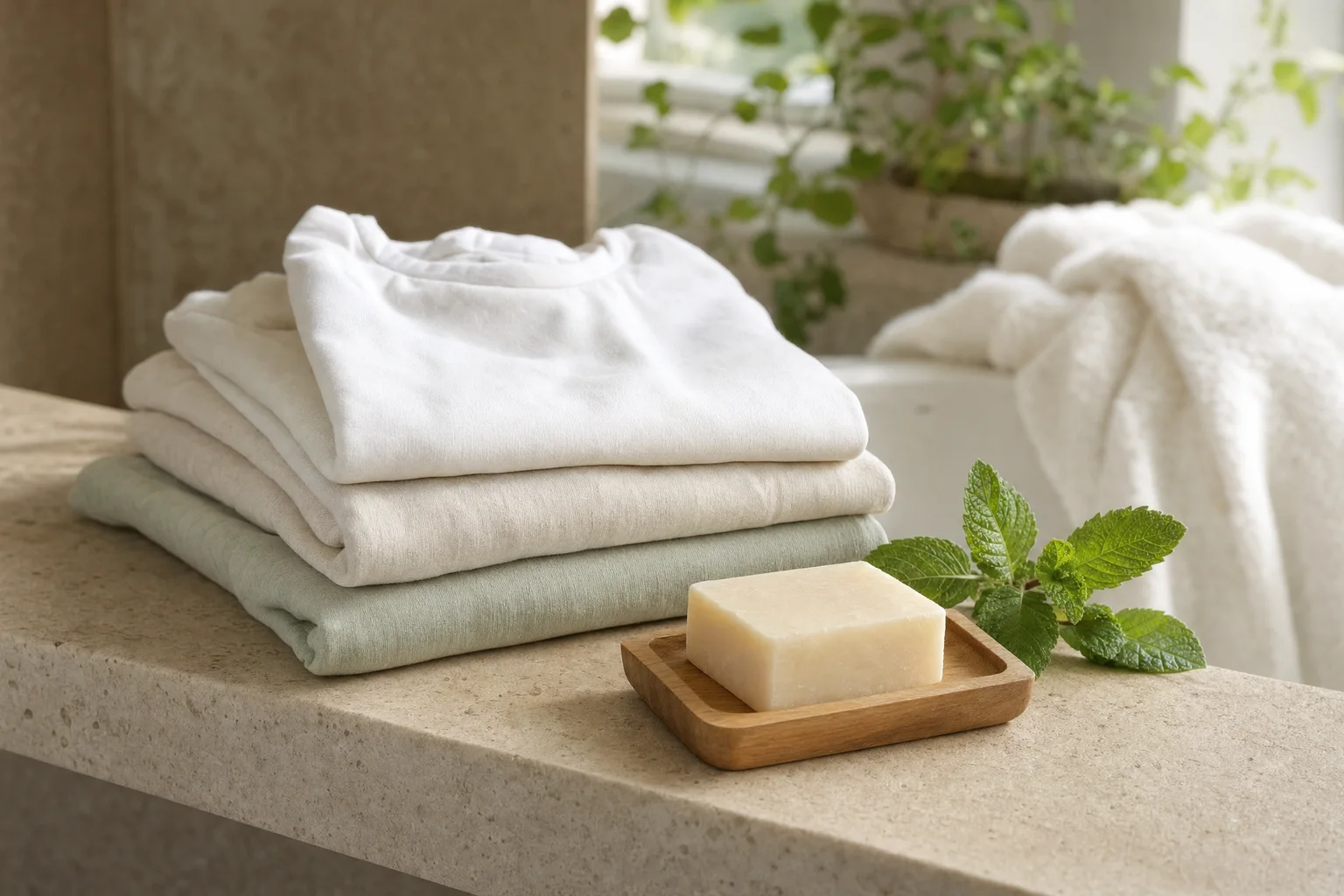
The American Academy of Dermatology advises people who sweat heavily to wear breathable fabrics such as cotton. Cotton is soft, lets air through well and absorbs moisture. The downside is that absorbed moisture is slow to leave: with heavy sweating a wet cotton garment gets heavy and stays damp.
Loosely woven linen breathes even better and usually dries faster than cotton, which is why it is so popular in the heat. It creases, but in loose summer clothing that is part of the look. Blends with a high share of cotton or linen also work well for everyday wear.
Synthetics and wool: where they make sense
The NHS advises people with excessive sweating not to wear tight clothes or synthetic fabrics such as nylon. Ordinary dense synthetics do not breathe well: you feel hotter underneath, and sweat stays on the skin.
Technical sportswear is a separate case. It is made from specially knitted synthetic fibres that pull moisture away from the skin and dry quickly, so it is more comfortable than cotton during a workout. But there is a trade-off: in a 2014 study, polyester T-shirts worn in an indoor cycling class smelled noticeably more intense and less pleasant than cotton ones. We explain how to deal with this in “How to get the sweat smell out of sportswear”.
Fine wool, such as merino, is often used in sports and hiking clothing: it absorbs some moisture while still feeling warm. It is a good option for cool weather and long walks, but usually not for a hot office.
Cut and colour matter as much as fabric
Even a good fabric will not help if the garment clings to your underarms. The NHS recommends loose-fitting clothes to make sweat less noticeable.
- A loose armhole leaves a layer of air between the fabric and your skin.
- Marks show less on white, black and navy than on light grey, light blue and pastels.
- A small print or stripes hide a damp patch better than a plain fabric.
- A thin cotton vest under a shirt, or underarm shields, take the moisture first.
- A spare top in your bag helps on long days; the American Academy of Dermatology suggests this too.
What to wear: a quick cheat sheet
Think about the situation rather than one “perfect” fabric.
- Office: a cotton or high-cotton shirt, a loose cut and a thin vest underneath. More in “Sweating at work: how to stop worrying about stains on your clothes”.
- Heat: loose, light-coloured linen and cotton. Summer tips are collected in “Sweating in the heat: what works in summer in Almaty and Shymkent”.
- Sport: technical moisture-wicking fabric, washed straight after training.
- Sleep: light cotton or linen bedding and pyjamas, and a cool room.
The bottom line: clothing plus antiperspirant
The right fabric makes sweat less visible, but it does not remove it. The best result comes from combining both: less sweat in the underarms and clothing that copes with the rest. If you sweat heavily even when it is cool and you are at rest, read “What is hyperhidrosis, and when should you see a doctor?”.
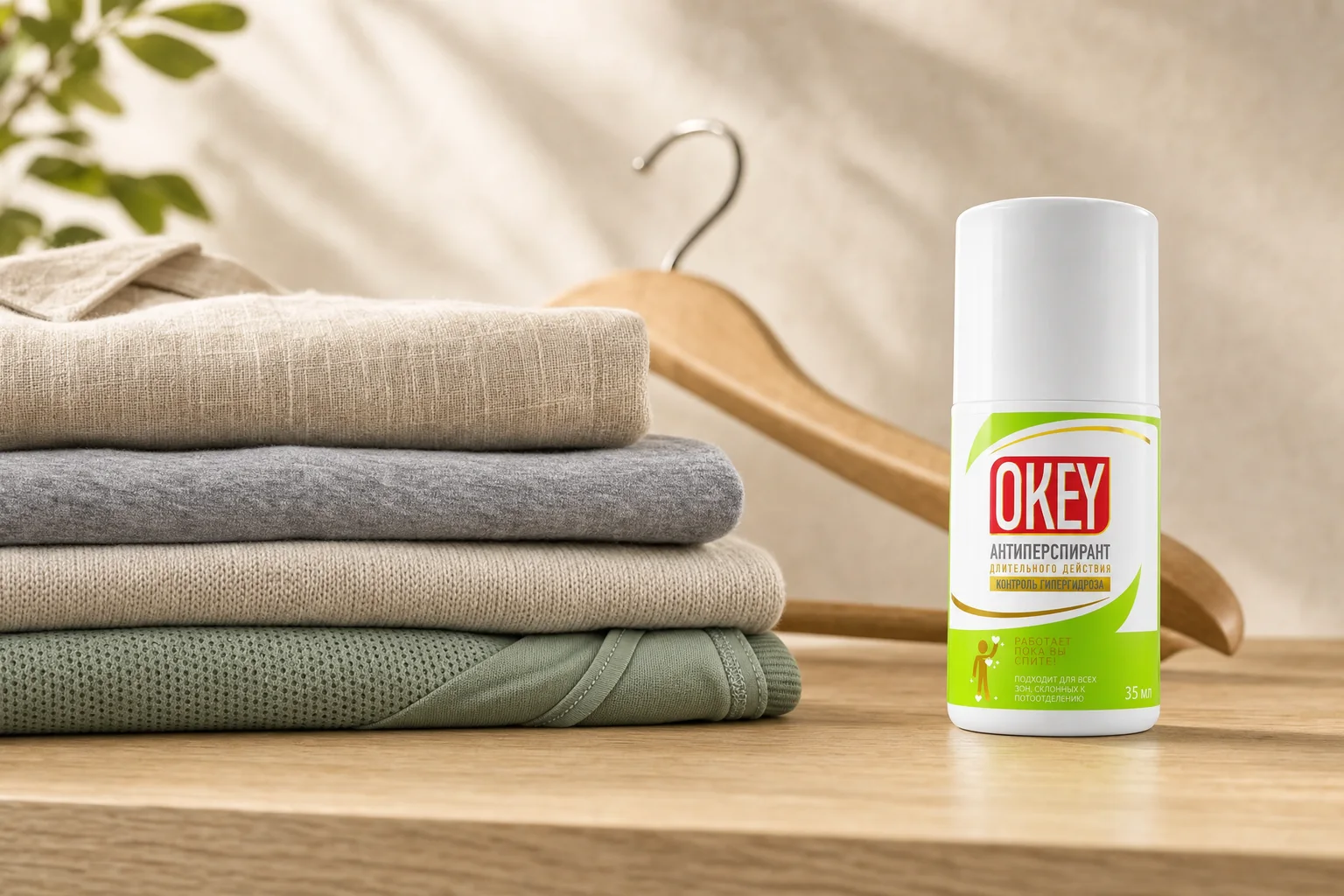
OKEY is a fragrance-free underarm antiperspirant for women and men, so it does not compete with the scent of freshly washed clothes or your perfume. It comes in a 35 ml roll-on bottle and is applied in the evening before bed to completely dry skin, as the instructions say. It costs 7990 ₸ and is available on Kaspi via the button below, and if it does not suit you, the bottle can be returned within 14 days.