Sweating in the heat: what works in summer in Almaty and Shymkent
In July the asphalt in Almaty is already scorching by noon, and in Shymkent the heat lasts for weeks and barely eases in the evening. Sweating in this weather is your body’s normal temperature control at work. The goal is not to stop sweating altogether, but to keep wet marks from running your day.
Short answer
In the heat your body cools itself with sweat, and that is normal. Apply antiperspirant in the evening before bed to cooled, completely dry skin, not in the morning before you go out. During the day, loose cotton and linen clothing, water throughout the day and a spare T-shirt help. If sweating comes with dizziness, nausea or confusion, cool down immediately and seek medical help.
Why sweating in the heat is unavoidable
Sweat is the body’s main way of shedding excess heat: moisture evaporates from the skin and cools it. The hotter it is outside and the more you move, the harder your sweat glands work. There is no need to switch this mechanism off completely, and it would not be safe.
An antiperspirant works locally: it reduces sweat release in the area where it is applied, such as the underarms. The underarms are a small part of the body’s surface, so local use does not take away the body’s main way of cooling down. A sensible summer goal is dry underarms and clean clothes, not “no sweat at all”.
Almaty and Shymkent: how summer differs
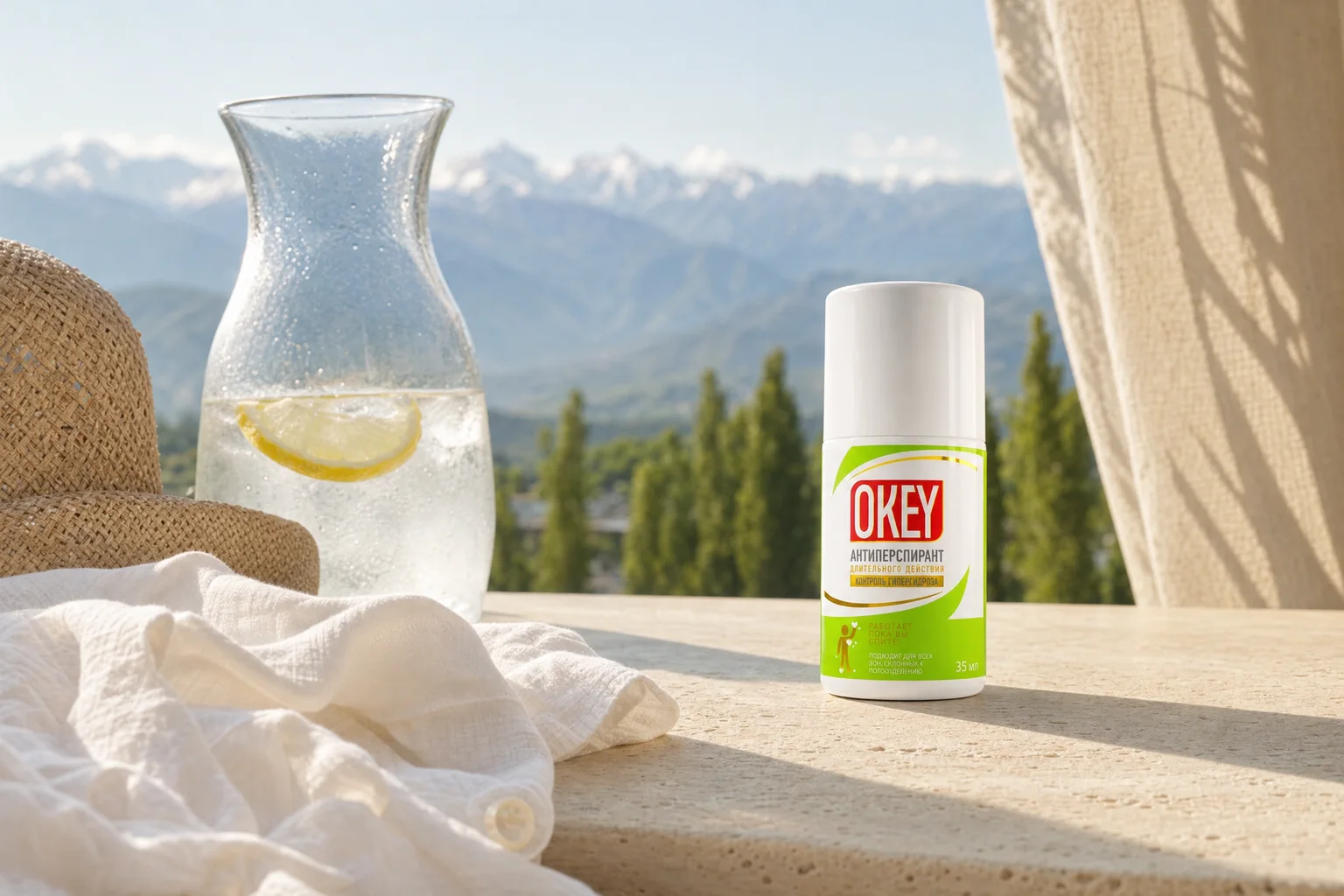
Almaty is hot during the day, but the nearby mountains often bring cooler air in the evening. That suits a long-lasting antiperspirant: by night the skin has time to cool down and dry.
In Shymkent summer is usually longer and drier, and a flat without air conditioning can feel stuffy at night. In that case, cool the room or take a cool shower and dry yourself thoroughly before applying: on warm, damp skin the product spreads less evenly and is more likely to cause discomfort.
An evening plan instead of a morning rush
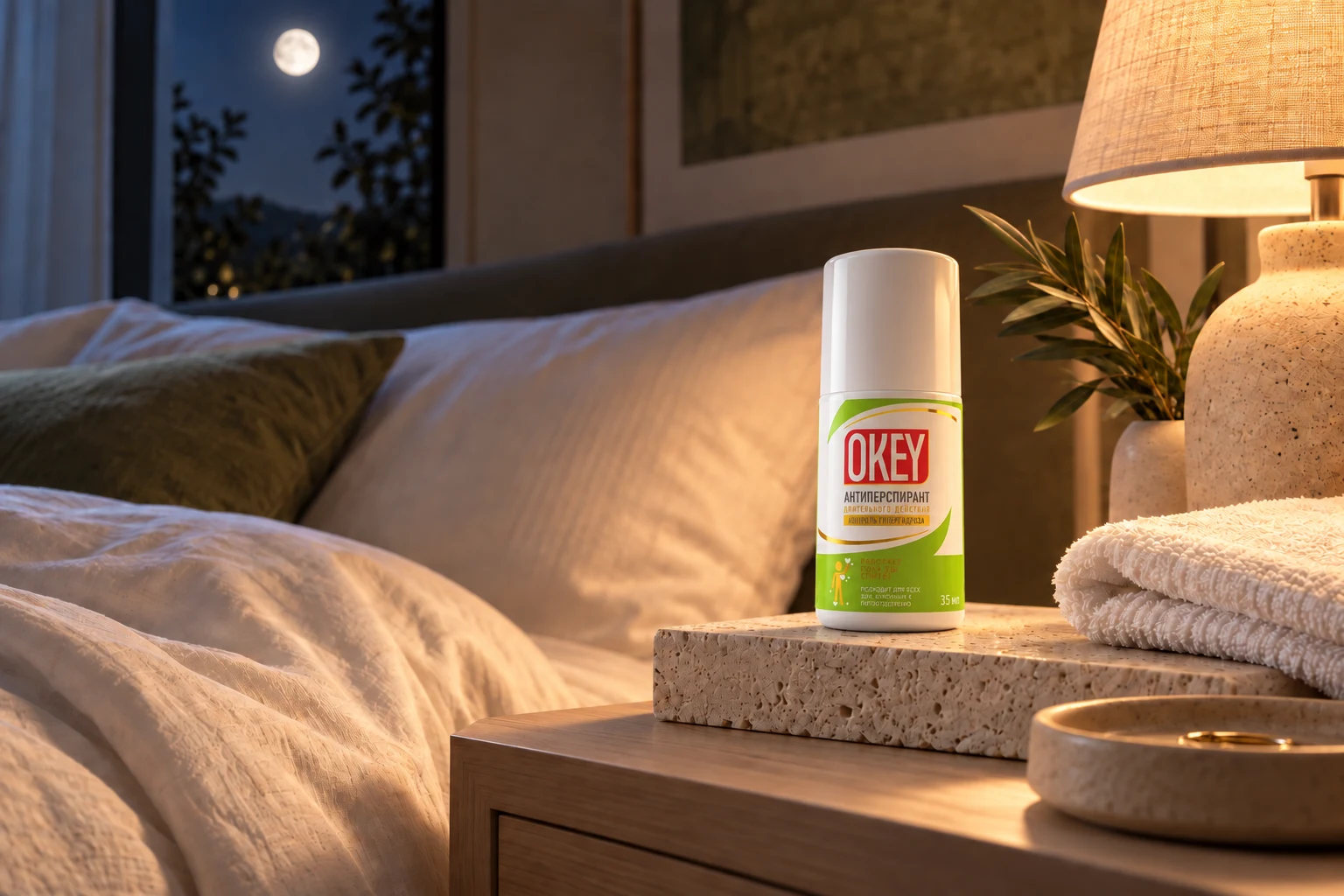
Summer makes it especially clear why OKEY is applied at night: in the morning, while you get ready to face the heat, your skin quickly becomes damp. It is easier to create the right conditions in the evening.
- Shower and pat your underarms completely dry. If the skin is still warm and damp, wait a few minutes or dry it with cool air from a fan held at a distance.
- Apply a thin layer of OKEY: 2–3 strokes of the roller over clean, undamaged skin.
- Let the layer dry completely and only then go to bed in loose clothing.
- In the morning, wash off the residue with water and mild soap. There is no need to reapply during the day.
- After shaving or hair removal, wait up to 48 hours, and never apply the product to sunburnt or irritated skin.
What helps during the day
An antiperspirant solves only part of the problem. The rest comes down to habits that ease the strain heat puts on the whole body.
We covered white and yellow marks on clothing in detail in “Sweat stains on clothes: where yellow and white marks come from”.
- Wear loose cotton and linen clothing. Dense synthetics trap heat and moisture.
- Drink water throughout the day without waiting until you are very thirsty, especially if you walk a lot or work outdoors.
- Plan walks and exercise for the morning or evening, and stay in the shade during the hottest hours when you can.
- Take a spare T-shirt on long days: when you move from the heat into air conditioning, wet fabric quickly turns cold.
When sweating in the heat means seeing a doctor
With heat exhaustion, heavy sweating may come with dizziness, headache, nausea, weakness and cramps. Move somewhere cool, drink water and loosen your clothing. If you do not feel better within 30 minutes, seek medical help.
Confusion, fainting, a very high body temperature, or hot skin that has stopped sweating in intense heat are signs of heatstroke. Call 103 or 112 straight away.
If you sweat heavily in cool weather too, at night or all over your body, the heat is not the cause. We look at those cases in “What is hyperhidrosis, and when should you see a doctor?”.