Sweat stains on clothes: where yellow and white marks come from
Underarm marks are a common reason to give up favourite shirts and T-shirts. They are usually left not by sweat alone, but by a combination of sweat, the product on the skin, and the way the fabric is cared for.
Short answer
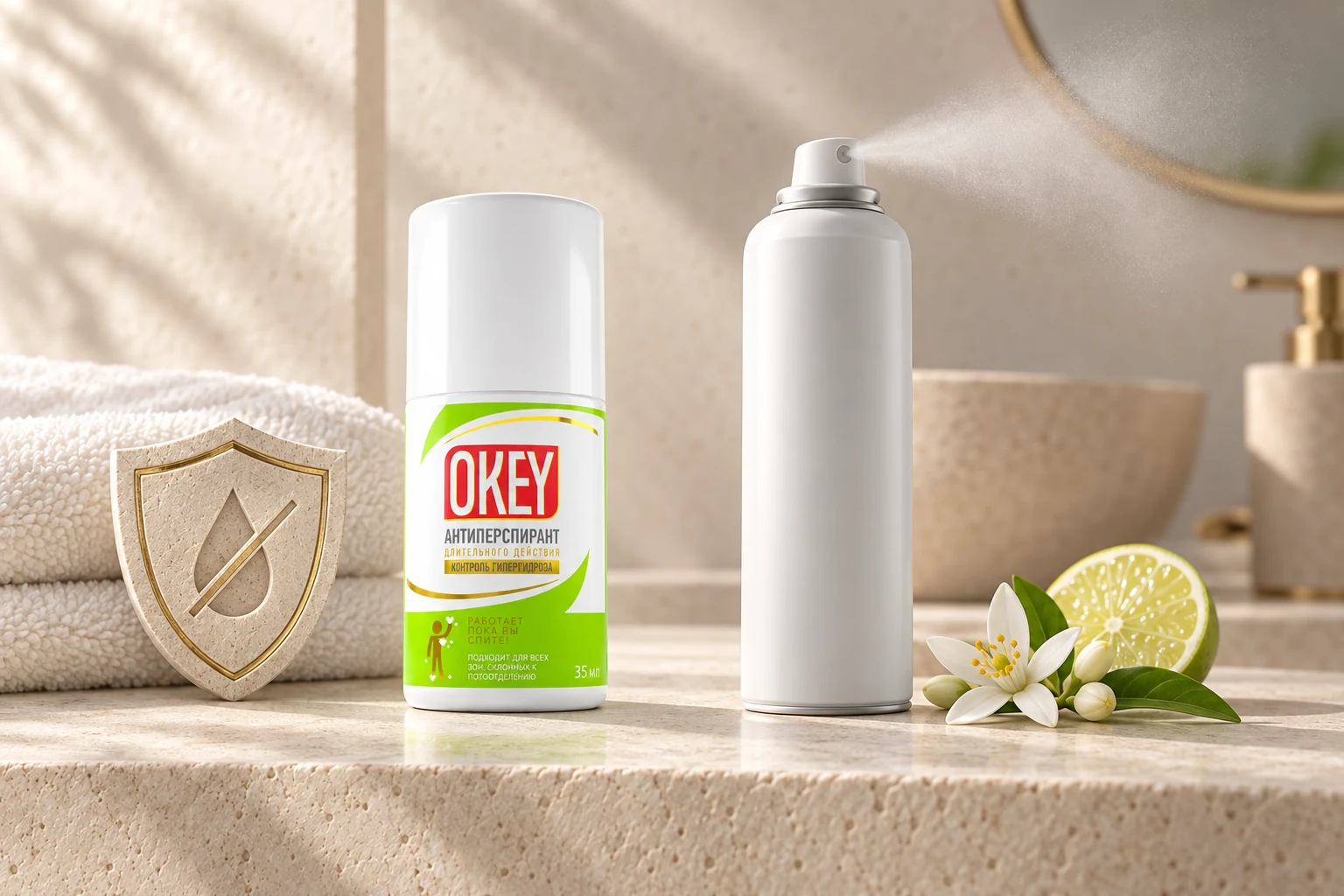
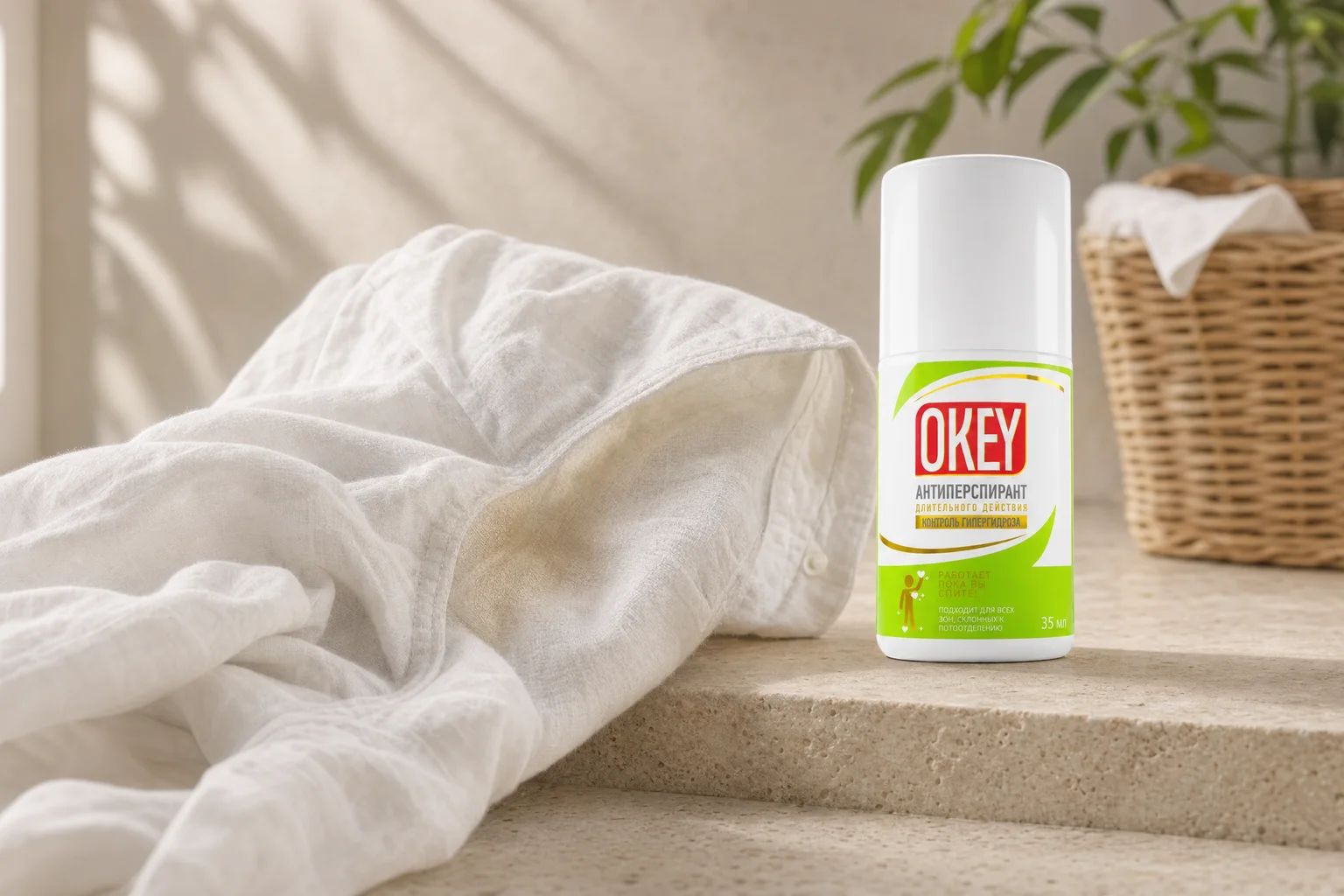
White marks are most often left by product that has not had time to dry. Yellow stains build up gradually as sweat and aluminium salts from a daytime antiperspirant accumulate in the fibres. A thin layer on dry skin, time to dry, breathable fabrics, and washing without heat until the stain is gone all help.
Why stains appear
Fresh sweat is almost colourless. Stains form when its components and cosmetic residue stay in the fabric for a long time and build up in the fibres with every wear.
If a product is applied in the morning and touches clothing almost immediately, some of it inevitably transfers to the fabric. This is especially noticeable with a thick layer and with synthetic fabrics that let less air through.
White and yellow marks are different stories
White marks usually show up straight away, most often on dark clothing. They are residue of a product that was applied too thickly or did not dry before you got dressed.
Yellow stains develop gradually, especially on white and light-coloured garments. The yellowing appears when aluminium salts from an antiperspirant mix with sweat and become fixed in the fabric fibres over time.
How to prevent marks
The main rule: the product should not still be wet on your skin when you put your clothes on.
- Apply a thin layer to completely dry skin.
- Let the product dry before getting dressed.
- Choose breathable fabrics such as cotton and linen.
- If you sweat heavily, carry a spare T-shirt or use underarm shields to protect your clothing.
How to wash stained garments
Do not iron a stained garment or dry it on high heat until the mark is removed: heat can set the stain. Treat the area before washing, for example by rubbing in undiluted liquid dishwashing detergent, then launder the garment as usual.
Use stain removers and bleach only if the care label allows them, and test on a hidden area first. Not every fabric tolerates chlorine bleach.
Why OKEY does not reach your daytime clothes
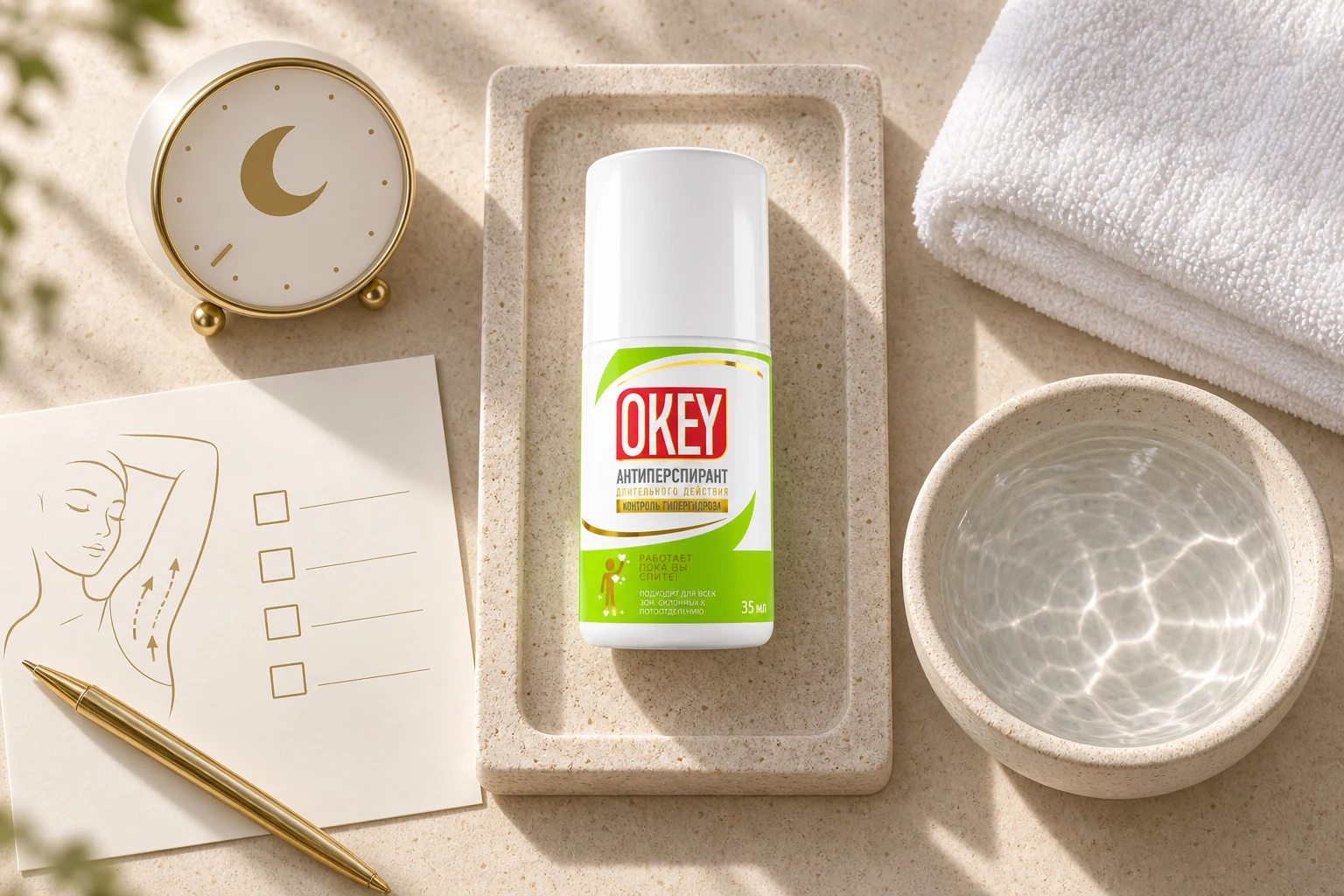
OKEY is applied in the evening before bed to clean, completely dry skin and left on overnight. In the morning the residue is washed off with water and mild soap, so the product does not transfer to the clothes you wear during the day.
To keep your nightwear clean as well, apply a thin layer, wait until it has dried completely, and choose loose pyjamas. There is no need to reapply the product during the day.