Sweating and body weight: why a larger body sweats more
“I sweat because I’m overweight”: many people think this and often blame themselves. Weight does affect sweating, but it is not the whole story and not a reason for shame. Here is what comes down to physiology, where the problem for the skin begins and what you can do today, without blame or strict diets.
Short answer
The Australian health site Better Health Channel lists obesity among the known causes of heavy sweating and weight reduction, if a person is overweight, among the measures. But you can sweat heavily at any weight: primary hyperhidrosis is not linked to it. Skin folds are a separate issue: moisture cannot evaporate there, and DermNet points to the risk of intertrigo. Loose clothing, dry folds and an antiperspirant on intact skin help.
Why weight affects sweating
Sweat is the body’s main way of cooling down. The greater the body mass, the more energy any movement takes, whether climbing stairs, walking or standing in a hot bus, and the more heat has to be released. So with more weight, sweating starts sooner and there is more of it.
Better Health Channel, run by the Victorian government in Australia, lists obesity among the known causes of increased sweating, alongside menopause, illnesses with fever, an overactive thyroid, diabetes and certain medicines.
Not just weight
People of average weight can sweat heavily too. Primary hyperhidrosis is a feature of how the sweat glands work: the underarms, palms or feet sweat from the teens, regardless of weight. If that was the case before you gained weight, losing weight may reduce overall sweating, but it will not remove this feature.
Also pay attention to causes that often come with weight. Diabetes and the thyroid can increase sweating on their own; see “Sweating and diabetes: when sweat signals low blood sugar” and “Sweating and the thyroid: when to check your hormones”.
Skin folds: where sweat cannot evaporate
Where skin touches skin, under the breasts, under the belly, on the inner thighs and in the underarms, sweat cannot evaporate. According to DermNet, a New Zealand dermatology reference, this makes intertrigo, an inflammatory rash in skin folds, more likely. It is particularly common with excess weight, diabetes and heavy sweating, and heat and humidity add to the risk.
DermNet advises drying skin folds thoroughly after exertion and showering, for example with a hairdryer on a cool setting, and names an antiperspirant as one way to reduce sweat. At the same time, dryness from an antiperspirant can itself irritate inflamed skin. So do not apply products to folds that are red, weeping or cracked: see a doctor first.
What helps every day
These measures are simple, and you do not need to wait for your weight to change to start:
- loose clothing made of cotton or linen: the NHS advises loose-fitting clothes and avoiding tight clothes and synthetic fabrics; more in “Fabrics for heavy sweating: cotton, linen, wool or synthetics”;
- socks that absorb moisture well, and a spare pair for the day;
- after a shower, dry your skin completely, including the folds;
- antiperspirant in the evening on clean, dry skin rather than in the morning on damp skin;
- less alcohol and spicy food if you notice you sweat more after them, which is also NHS advice.
When to see a doctor
The NHS advises seeing a doctor about heavy sweating if self-care is not helping, it has lasted more than six months, it happens at least once a week, it stops you getting on with daily activities, it happens at night or you are taking medicine for another condition.
Also go if sweating started suddenly and all over the body, or if skin folds become red, painful or weeping. And if you want to lose weight, the NHS advises asking a doctor for help, especially if you have prediabetes, diabetes, high blood pressure or joint pain. It is a calm conversation about your health, not an exam.
Bottom line: dryness without waiting or blame
Weight affects sweating, but you do not have to live with damp underarms until it changes. Loose clothing, dry skin and the right antiperspirant give results right now.
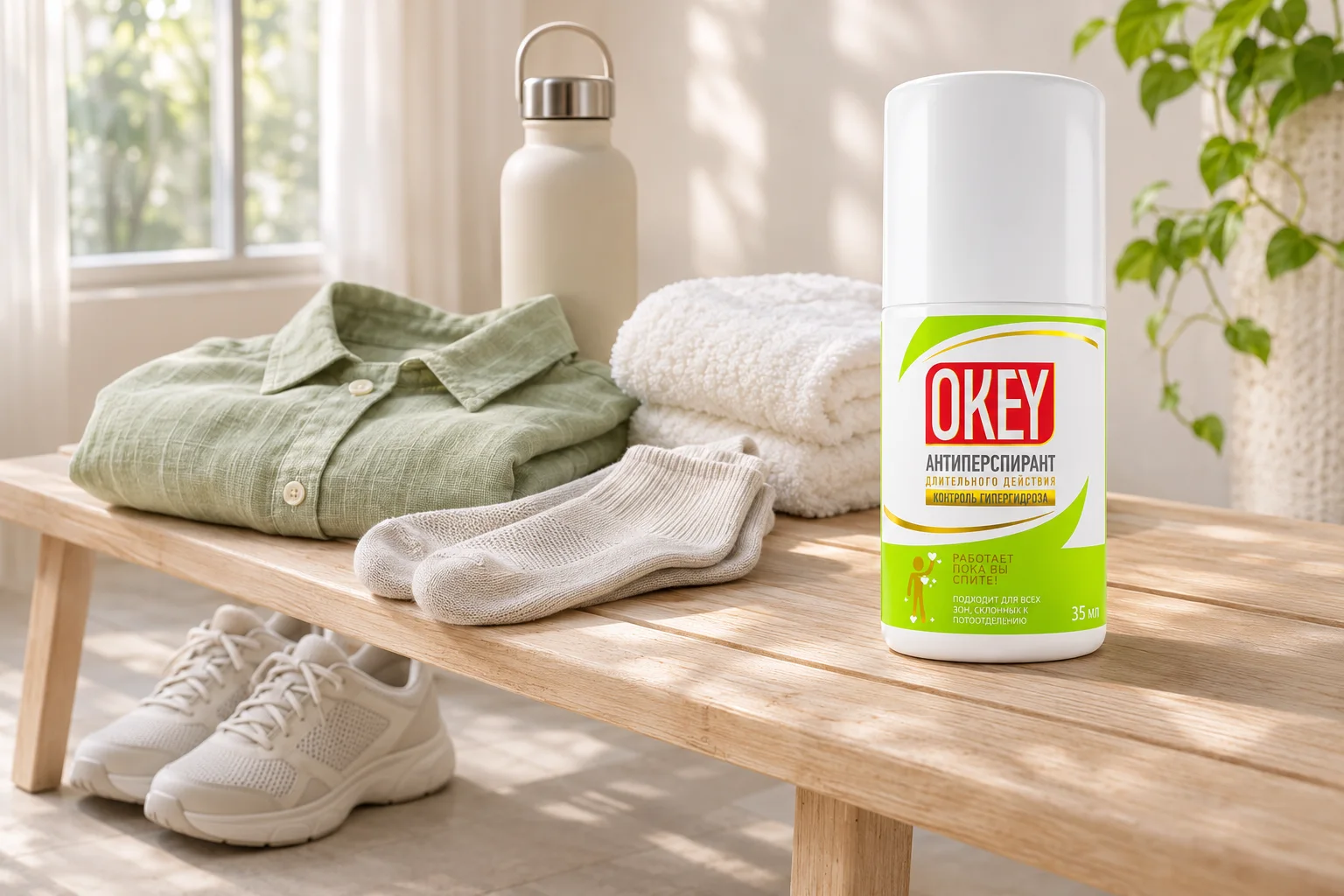
OKEY suits all areas prone to excessive sweating and is applied in the evening to dry, intact skin. One bottle lasts a long time, because after the first applications, once or twice a week or as needed is enough to maintain the effect.
OKEY is a long-lasting, fragrance-free antiperspirant for women and men in a 35 ml roll-on bottle. It suits all areas prone to excessive sweating. According to the instructions, it is applied in the evening before bed in a thin layer to clean, completely dry and intact skin, and any residue is washed off in the morning. OKEY is available on Kaspi for 7990 ₸ with a 14-day bottle return. Regular customers can buy it on our website okeystaydry.com for 6990 ₸ with free delivery to a Flip pickup point, without a return option. The buy button is below.